
Facial pigment changes are easier to sort out when you describe them the same way each time. This guide covers that first step and stops before any treatment decision.
Describing pigment: the second of four steps
You notice a patch, you describe it, you get it examined, and then you talk about options. This page covers the describing. For an official overview to read alongside it, see the American Academy of Dermatology's melasma overview.
What to gather before you describe it
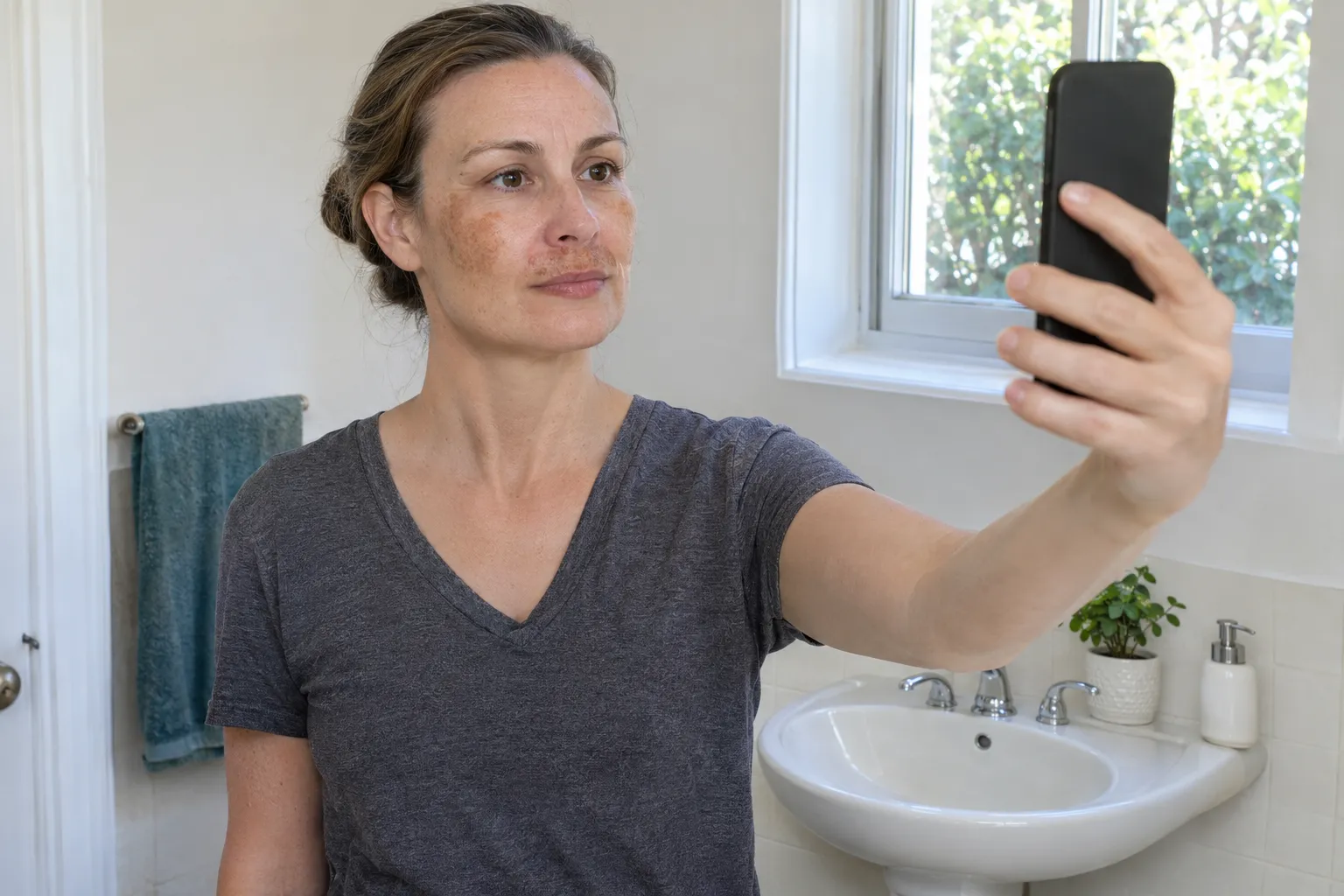
Photograph your face in even daylight from the front and both sides, and date every image. Write down where the patches sit and when you first saw them. List the skin products you use and any earlier treatment you have tried.
Two descriptions to hold side by side
The American Academy of Dermatology says melasma is a skin condition that causes patches and spots, usually on the face, which are darker than your natural skin tone. Cleveland Clinic describes melasma as a skin condition characterized by brown or blue-gray patches or freckle-like spots. Read both, then write your own description in plain words, and use the same words each time you describe it.
Where the wording differs from a practitioner's view
The two sources above overlap, but they do not use the same words. A practitioner works from the skin in front of them, not from either sentence. If their description of your patches differs from yours, ask what they see and add it to your notes. Keep your photos as the common reference.
Bringing your photos to a pigment exam
Take your photos and notes to a professional exam. Once the patches are examined and named, the talk moves to options. For related reading on another pigment topic, see a PubMed Central review of postinflammatory hyperpigmentation in skin of color.