
Checking a mole letter by letter means looking at it in a fixed order, so you check the same things every time. This guide places it in the sequence: it comes after you spot a mole and before you see a dermatologist. Background on the condition behind it is on the Skin Cancer Foundation's melanoma page.
Checking comes second, after finding the mole
The order is simple. You find a mole, you check it against the rule, you record what you see, and you decide whether to book a visit. This page covers the second step.
Mirrors, light and a notebook for the check
Use a full-length mirror, a hand mirror and bright, even light. Have your phone ready for photos and a notebook for dates. If you can, ask someone to look at your back and scalp. For reference images to compare against, the Skin Cancer Foundation's skin cancer pictures are a helpful companion.
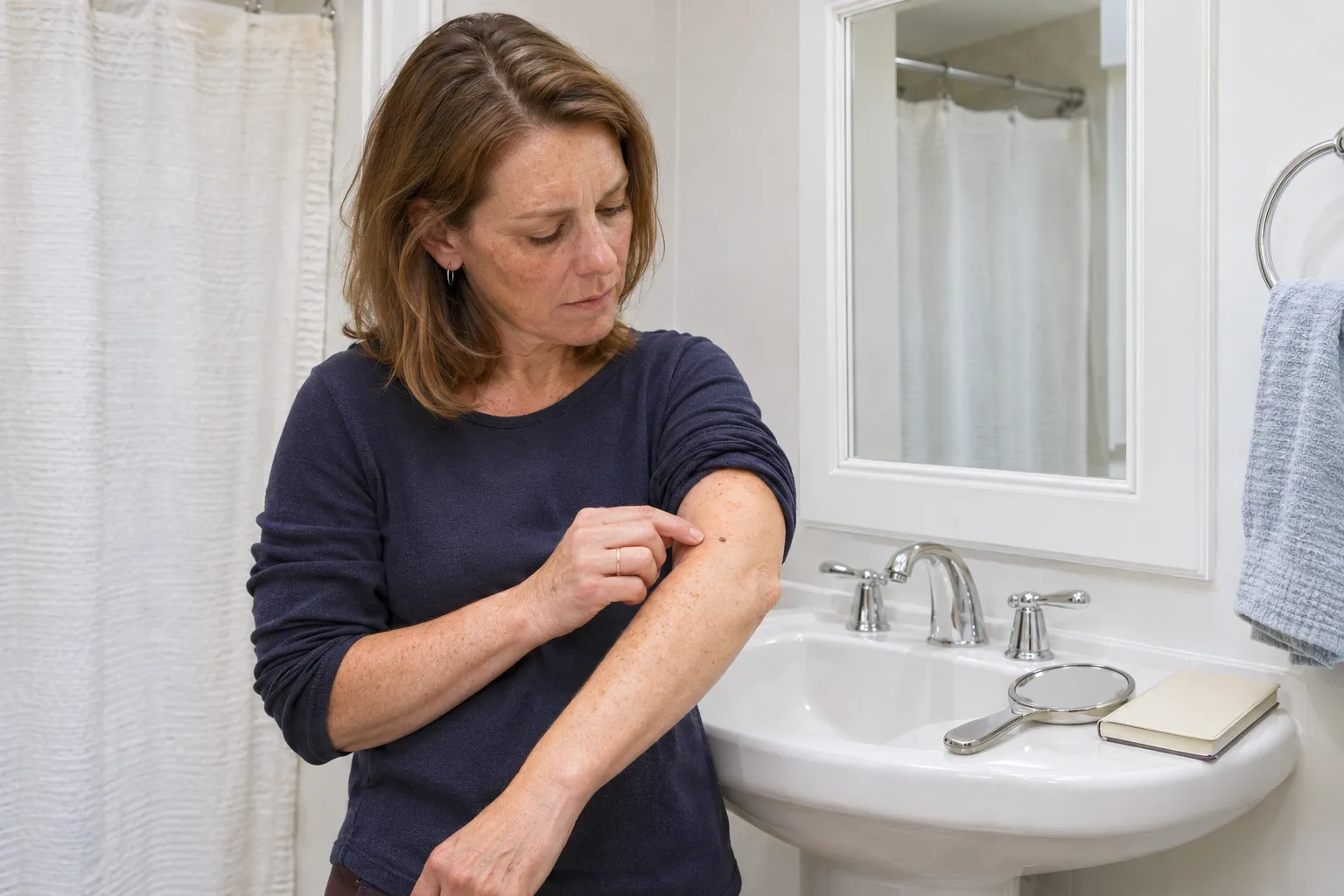
Letter A: asymmetry
The American Academy of Dermatology describes asymmetry this way: one half of the spot is unlike the other half. Picture a line through the middle of the mole and compare the two sides. Write down what you see in plain words.
Working through the rest of the letters
The full A to E list, with each letter explained, is on the American Academy of Dermatology's page, What to look for: ABCDEs of melanoma. Take the letters one at a time and in order, writing a note for each. Photograph the mole once you have finished, so your notes and your picture agree.
When the checklist and a clinician's eye disagree
A checklist is a tool you can use at home. A dermatologist looks at a mole in a different way, and may weigh things the list does not name. If a spot passes your own check but still bothers you, say so at the visit. Do not wait for it to fail the list before you ask.
Dating your record and repeating the check
Date your notes and photos, then repeat the check on a set schedule. If anything looks different from your last record, book an appointment and bring the file. The Skin Cancer Foundation's guidance on self-exams can help you build a routine.